
What Is My Health
  • Home
  • The 8 Dimensions of Health Physical Health Mental Health Intellectual Health Social Health Environmental Health Financial Health Spiritual Health Occupational Health
  • Blogs Podcast Videos Newsfeeds Resources
  • About WIMH Our Team Partners & Collaborators Contact
What Is My Health
  • Home/
  • Topics/
    • The 8 Dimensions of Health
    • Physical Health
    • Mental Health
    • Intellectual Health
    • Social Health
    • Environmental Health
    • Financial Health
    • Spiritual Health
    • Occupational Health
  • Media/
    • Blogs
    • Podcast
    • Videos
    • Newsfeeds
    • Resources
  • Info/
    • About WIMH
    • Our Team
    • Partners & Collaborators
    • Contact
Screen+Shot+2019-04-12+at+2.22.35+PM.jpg
What Is My Health

Let's change the way we see health

Common "Cents"

by Capt. Eugene Bucciarelli, CPA

What Is My Health
  • Home/
  • Topics/
    • The 8 Dimensions of Health
    • Physical Health
    • Mental Health
    • Intellectual Health
    • Social Health
    • Environmental Health
    • Financial Health
    • Spiritual Health
    • Occupational Health
  • Media/
    • Blogs
    • Podcast
    • Videos
    • Newsfeeds
    • Resources
  • Info/
    • About WIMH
    • Our Team
    • Partners & Collaborators
    • Contact
December 29, 2021

Be Prepared: Pensions, Annuities, and Social Security

December 29, 2021/ Gene Bucciarelli

DISCLAIMER: These articles are based on the tax requirements for 2020. Tax requirements change frequently so future requirements may be different.  This article and future articles on this subject are not tax advice, they are meant to help you to know what documentation to prepare when submitting your information to your tax preparer. Always check with your tax preparer for the proper documentation required for that year and for any specific tax advice.

Be Prepared (Part 6)

Pensions, Annuities, and Social Security


As the title suggests being prepared to do your taxes is important as it can save you time. It can also save you money. The organized documentation you give to your tax preparer, even if it you do your own taxes will make the work go faster and it will enable the correct calculation of your tax or refund. No sense paying to much or getting a smaller refund than you deserve.

In this post, we will discuss regular payments made through pensions and annuities, as well as social security benefits, as they relate to tax preparation.


Pensions

A pension is a series of determinable payments made to you after you retire from work, or are disabled and cannot work. Pension payments are made regularly and are based on such factors as years of service and prior compensation. Pensions are reported on line 5a of the 1040 Form.

 

1040 Form


Disability pensions 

One common type of pension is a disability pension. With a disability pension, you receive disability payments if you retired on disability, but haven't reached minimum retirement age. The condition that keeps you from working must last at least at least one year. A social security disability pension can be obtained by applying to the Social Security Administration.

Annuities

An annuity is a series of payments, under a contract from an insurance company, made at regular intervals over a period of more than 1 full year. They can be either fixed (under which you receive a definite amount) or variable (not fixed). You can buy this contract alone, or with the help of your employer. Annuities are reported on line 5b of the 1040 Form.



Types of annuities

The most common types of annuities include the following:

Fixed-period annuities

With a fixed-period annuity, you receive definite amounts at regular intervals for a specified length of time. Monthly payments are the most common, but other choices may be available depending on the payer of the annuity.

Annuities for a single life

You receive definite amounts at regular intervals for life. The payments end upon death.

Joint and survivor annuities

Joint and survivor annuities can be held by no more than 2 people. The person who originally owned the annuity is listed first; a second person may be covered by the annuity. When a second person is listed, the first annuitant receives a definite amount at regular intervals for life. After he/she/they die, a second annuitant receives a definite amount at regular intervals for life. The amount paid to the second annuitant may or may not differ from the amount paid to the first annuitant.

Variable annuities 

With variable annuities, you receive payments that may vary in amount for a specified length of time, or for life. The amounts you receive may depend upon such variables as profits earned by the pension or annuity funds, cost-of-living indexes, or earnings from a mutual fund.

Documenting pension and annuity payments

Documentation required: 1099R Form

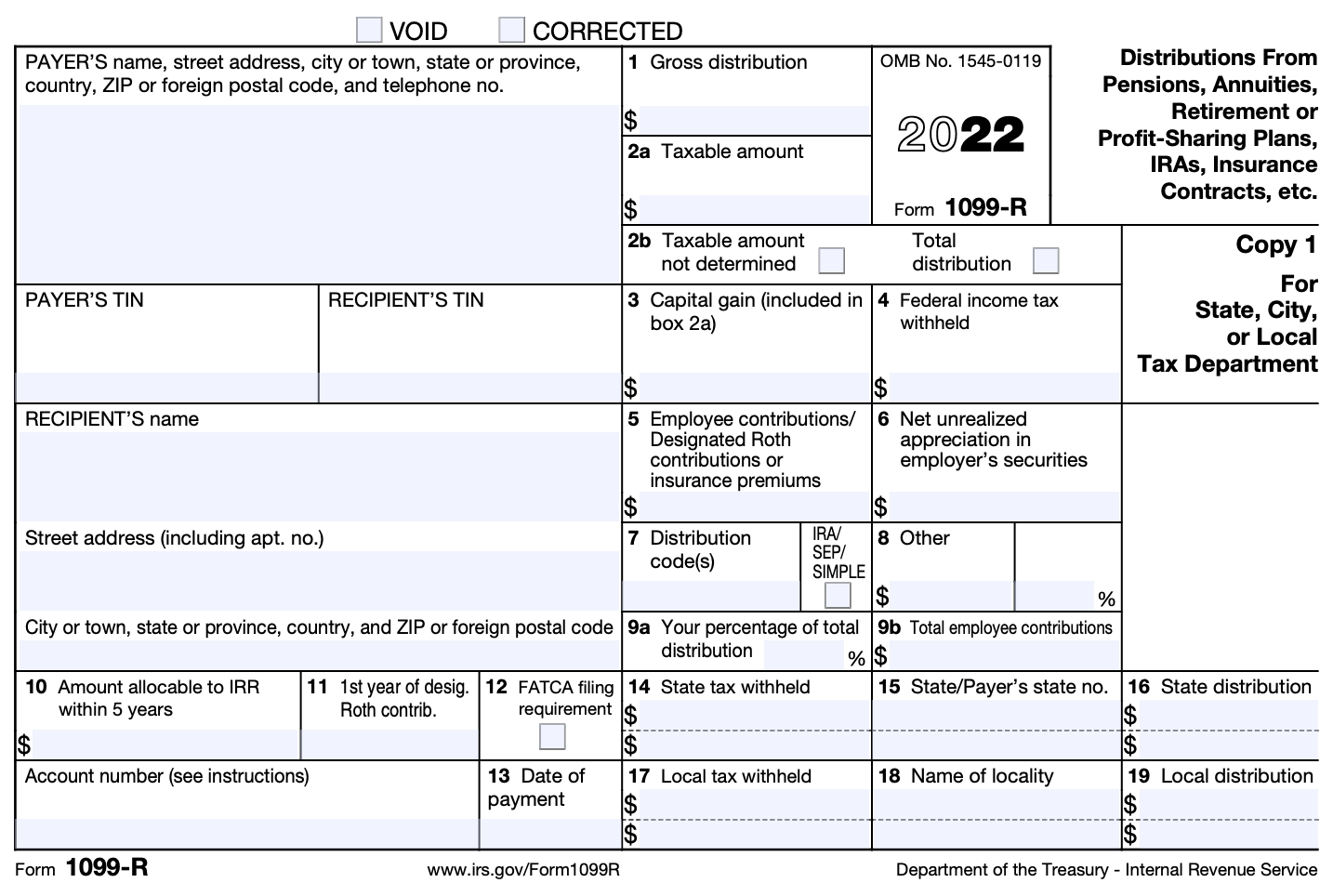
  • Distributions from Pensions, Annuities, Retirement or, Individual retirement accounts (IRAs) are reported on the 1099R. It is a source document that is sent to each person that receives a distribution of $10 or more from annuities, pensions, permanent and total disability payments.
 

1099R Form


The most important boxes in the 1099R for most people are:

Box 1- Shows the total or gross amount that was distributed to the taxpayer this tax year.

Box 2a- Shows the portion of the distribution which is generally taxable.  

Box 2b- Contains two boxes which can be checked, which provide information from the payer about the distribution. Checking the first box indicates that you were unable to determine the taxable amount; in this case, Box 2a should be left blank. If the second box is checked, the distribution was a total distribution and closed out the account.

Box 4- Shows any federal income tax withheld when the distribution was received by the taxpayer.

Box 7- Displays a distribution code which identifies the type of distribution that was received. For example:
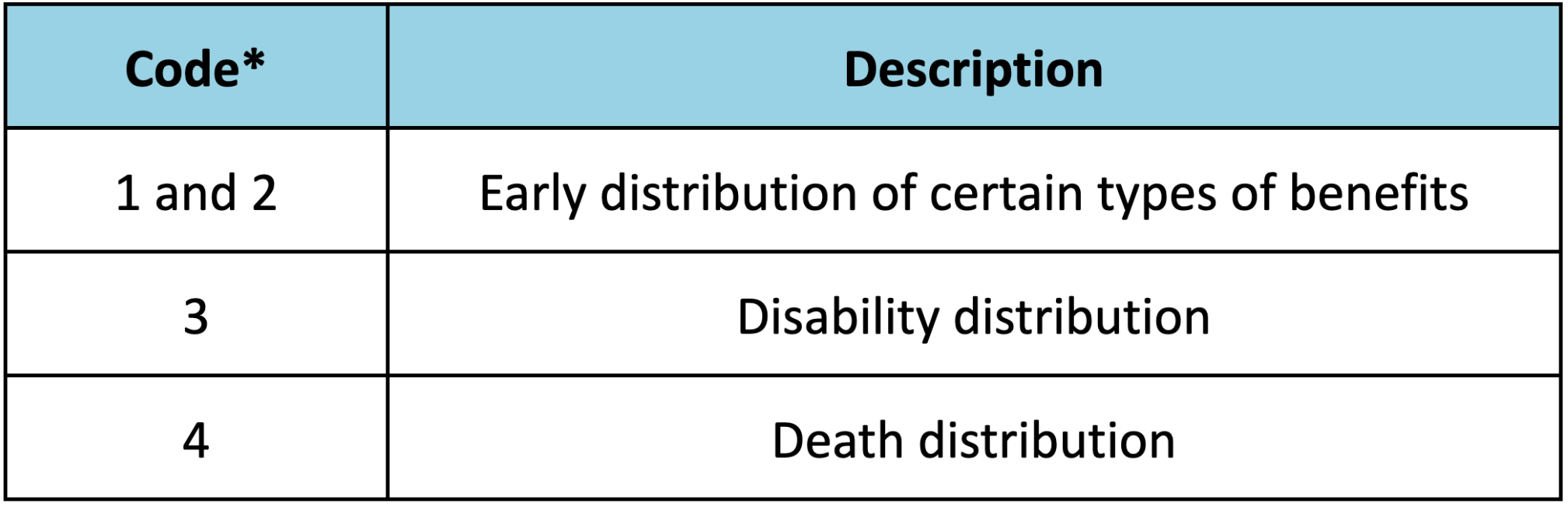
 

*A full list of these codes can be found here, on pages 7 and 9 of the PDF.


Social Security Benefits

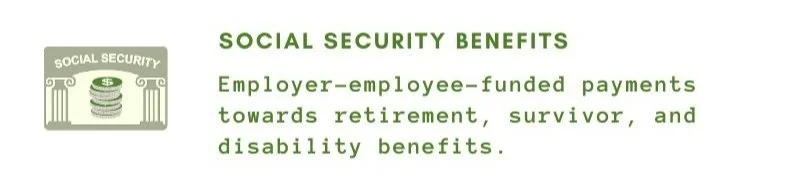
Taxpayers receiving Social Security benefits may have to pay federal income tax on a portion of those benefits. Social Security benefits include monthly retirement, survivor, and disability benefits. They do not include supplemental security income payments, which may be granted to low-income individuals who can prove they are unable to work for over a year due to a disability; these payments are not taxable.


Whether your social security payments—and what percentage of them—are taxable depends upon your (1) filing status, and (2) your total income, plus one-half of the Social Security money you collected during the year.
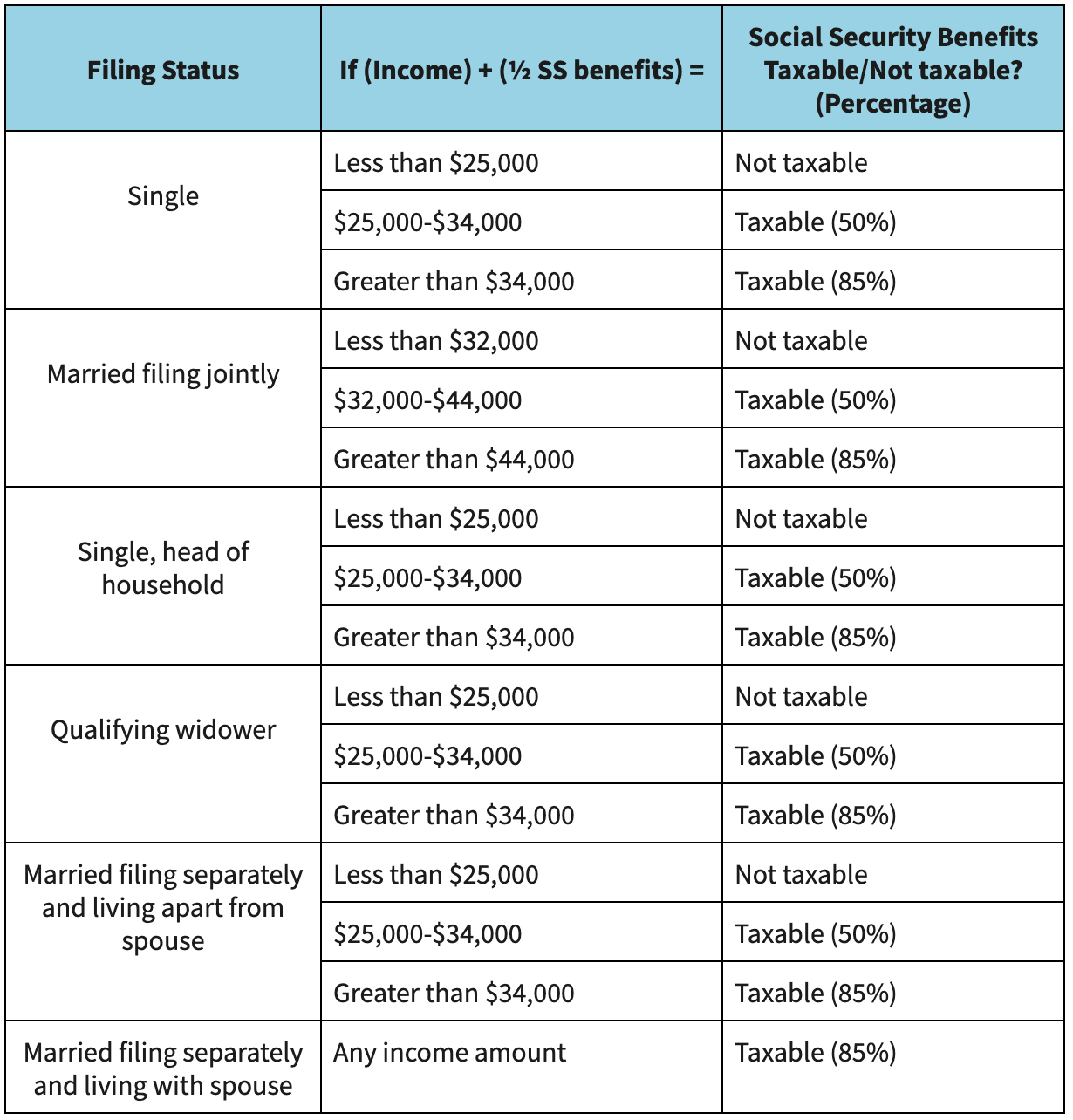
 

For more on taxable benefits, click here


Documentation required: SSA 1099 Social Security Statement received from the Social Security Administration. 

Stay tuned for Part 7 of our “Be Prepared” series on tax preparation.
Share your comments at the bottom of the page.

© Whatismyhealth
Common "Cents"
Be Prepared: Common Documents for Deductions and Credits
Financial Health
Be Prepared: Common Documents for Deductions and Credits
Financial Health

A checklist of common documents related to deductions and credits that you will need when preparing to file your taxes for last year.

Read More →
Financial Health
Be Prepared: Common Income-Related Tax Documents
Financial Health
Be Prepared: Common Income-Related Tax Documents
Financial Health

A checklist of common documents related to income that you will need when preparing to file your taxes for last year.

Read More →
Financial Health
Be Prepared: Pensions, Annuities, and Social Security
Financial Health
Be Prepared: Pensions, Annuities, and Social Security
Financial Health

Discussing regular payments made through pensions and annuities, as well as social security benefits, as they relate to tax preparation.

Read More →
Financial Health
Be Prepared: Interest, Dividends and Distributions
Financial Health
Be Prepared: Interest, Dividends and Distributions
Financial Health

Discussing investments and their yields, and how these returns factor into tax preparation.

Read More →
Financial Health
Be Prepared: Wages, the W-2, and 1098-E Forms
Financial Health
Be Prepared: Wages, the W-2, and 1098-E Forms
Financial Health

Reviewing employee wages, salaries, taxes, and other forms of compensation, and how they are reported.

Read More →
Financial Health
Be Prepared: Dependents
Financial Health
Be Prepared: Dependents
Financial Health

Claiming dependents on your tax return can earn you exemptions and save you money.

Read More →
Financial Health
Be Prepared: Standard Deductions
Financial Health
Be Prepared: Standard Deductions
Financial Health

The Standard Deduction is subtracted from your income, which may lower the amount of taxes you owe.

Read More →
Financial Health
Be Prepared: The 1040 Form & Filing Status
Financial Health
Be Prepared: The 1040 Form & Filing Status
Financial Health

Being prepared to do your taxes can save you time and money. An introduction to the 1040 tax form.

Read More →
Financial Health
Being a Smart Banking Consumer: Opening a Checking Account (continued)
Financial Health
Being a Smart Banking Consumer: Opening a Checking Account (continued)
Financial Health

A final look at what is needed to open a checking account and the documents you’ll receive.

Read More →
Financial Health
Being a Smart Banking Consumer: Opening a Checking Account
Financial Health
Being a Smart Banking Consumer: Opening a Checking Account
Financial Health

Reviewing what is needed to open a checking account, and some of the documents you’ll receive when you do.

Read More →
Financial Health
Being a Smart Banking Consumer: Checking Terminology and 7 Important Rules
Financial Health
Being a Smart Banking Consumer: Checking Terminology and 7 Important Rules
Financial Health

Discussing important terminology and checking account rules the bank follows.

Read More →
Financial Health
WHATISMYHEALTH+PRESENTS_+%281%29.jpg
Financial Health
Being a Smart Banking Consumer: Privacy and Regulations
Financial Health
Read More →
Financial Health
Being a Smart Banking Consumer: Electronic Money Movement
Financial Health
Being a Smart Banking Consumer: Electronic Money Movement
Financial Health

Addressing digital banking basics— online banking, the Automated Clearing House System, and debit cards. 

Read More →
Financial Health
Being a Smart Banking Consumer: More Common Account Activities
Financial Health
Being a Smart Banking Consumer: More Common Account Activities
Financial Health

Covering additional account activities including normal and unusual funds availability, as well as non-U.S. items.

Read More →
Financial Health
Being a Smart Banking Consumer: Common Checking Account Activities
Financial Health
Being a Smart Banking Consumer: Common Checking Account Activities
Financial Health

Outlining the most significant types of transactions completed using checking accounts.

Read More →
Financial Health
Being a Smart Banking Consumer: Savings Accounts
Financial Health
Being a Smart Banking Consumer: Savings Accounts
Financial Health

For many people, putting money in a savings account has a certain feeling and purpose— to save money.

Read More →
Financial Health
Being a Smart Banking Consumer: Checking Accounts
Financial Health
Being a Smart Banking Consumer: Checking Accounts
Financial Health

Every bank has different names for checking accounts, but generally, they are all basically limited to a few specific types.

Read More →
Financial Health
Being a Smart Banking Consumer: Consumer Rights and Responsibilities
Financial Health
Being a Smart Banking Consumer: Consumer Rights and Responsibilities
Financial Health

Your rights and responsibilities as an account holder are set out in the agreements you sign when you open an account.

Read More →
Financial Health
Being a Smart Banking Consumer: Bank Rights and Responsibilities
Financial Health
Being a Smart Banking Consumer: Bank Rights and Responsibilities
Financial Health

Some of the most important responsibilities a bank has to you, the customer, are set out in the agreements you sign and/or agree to when you open an account.

Read More →
Financial Health
Common Cents- Infographic 1- An Introduction to Banking.png
Financial Health
Being a Smart Banking Consumer: An Introduction to Banking
Financial Health

The more information you have about why and how banks do what they do, the better consumer you can be.

Read More →
Financial Health

Special thanks to our resources:

https://irs-form-1040.com/

https://www.ssa.gov/benefits/forms/

https://www.irs.gov/forms-pubs/about-publication-575

https://www.irs.gov/forms-pubs/about-publication-915

https://faq.ssa.gov/en-us/Topic/article/KA-01723

December 29, 2021/ Gene Bucciarelli/
Financial Health
health, financial health, tax, requirement, documentation, tax preparer, pension, annuities, annuity, social security, Social Security benefits, time, money, save, organization, taxes, calculate, refund, pay, payment, retire, retirement, disabled, work, pension payment, service, compensation, disability pension, minimum retirement age, Social Security Administration, contract, insurance company, fixed, variable, buy, employer, 1040 form, Form 1040, fixed-period annuity, monthly, payer, taxpayer, single, life, death, joint annuity, survivor annuity, coverage, annuitant, variable annuity, profit, funds, cost-of-living, index, earnings, mutual fund, 1099 form, Form 1099R, distributions, IRA, Individual Retirement Account, gross, distribution, taxable, account, closed, federal income tax, federal, withholding, tax withholding, receive, distribution code, social security benefits, benefits, survivor, disability, supplemental, security, income, low-income, percentage, filing status, total, collect, Married Filing Jointly, Married Filing Separately, Head of Household, Qualifying Widow(er) with Dependent Child, spouse

Gene Bucciarelli

  • Be Prepared: Common Income-Related ...
  • Be Prepared: Interest, Dividends ...

Powered by Squarespace.  View Disclaimer