What Is My Health
  • Home
  • The 8 Dimensions of Health Physical Health Mental Health Intellectual Health Social Health Environmental Health Financial Health Spiritual Health Occupational Health
  • Blogs Podcast Videos Newsfeeds Resources
  • About WIMH Our Team Partners & Collaborators Contact
What Is My Health
  • Home/
  • Topics/
    • The 8 Dimensions of Health
    • Physical Health
    • Mental Health
    • Intellectual Health
    • Social Health
    • Environmental Health
    • Financial Health
    • Spiritual Health
    • Occupational Health
  • Media/
    • Blogs
    • Podcast
    • Videos
    • Newsfeeds
    • Resources
  • Info/
    • About WIMH
    • Our Team
    • Partners & Collaborators
    • Contact
Screen+Shot+2019-04-12+at+2.22.35+PM.jpg
What Is My Health

Let's change the way we see health

Common "Cents"

by Capt. Eugene Bucciarelli, CPA

What Is My Health
  • Home/
  • Topics/
    • The 8 Dimensions of Health
    • Physical Health
    • Mental Health
    • Intellectual Health
    • Social Health
    • Environmental Health
    • Financial Health
    • Spiritual Health
    • Occupational Health
  • Media/
    • Blogs
    • Podcast
    • Videos
    • Newsfeeds
    • Resources
  • Info/
    • About WIMH
    • Our Team
    • Partners & Collaborators
    • Contact
March 25, 2020

Being a Smart Banking Consumer: Checking Terminology and 7 Important Rules

March 25, 2020/ Gene Bucciarelli

Banks are a place for us to handle our checking, savings, and possibly a loan. Beyond that, for many of us banking is a black hole. Why banks do what they do and how they do it is little understood outside of the banking community.

The more information you have, the better consumer you can be.

Part 10: Checking Terminology and 7 Important Rules 
 
WHATISMYHEALTH+PRESENTS_+%281%29.jpg
 

This article will discuss important terminology and certain checking account rules the bank follows.

Available Balance

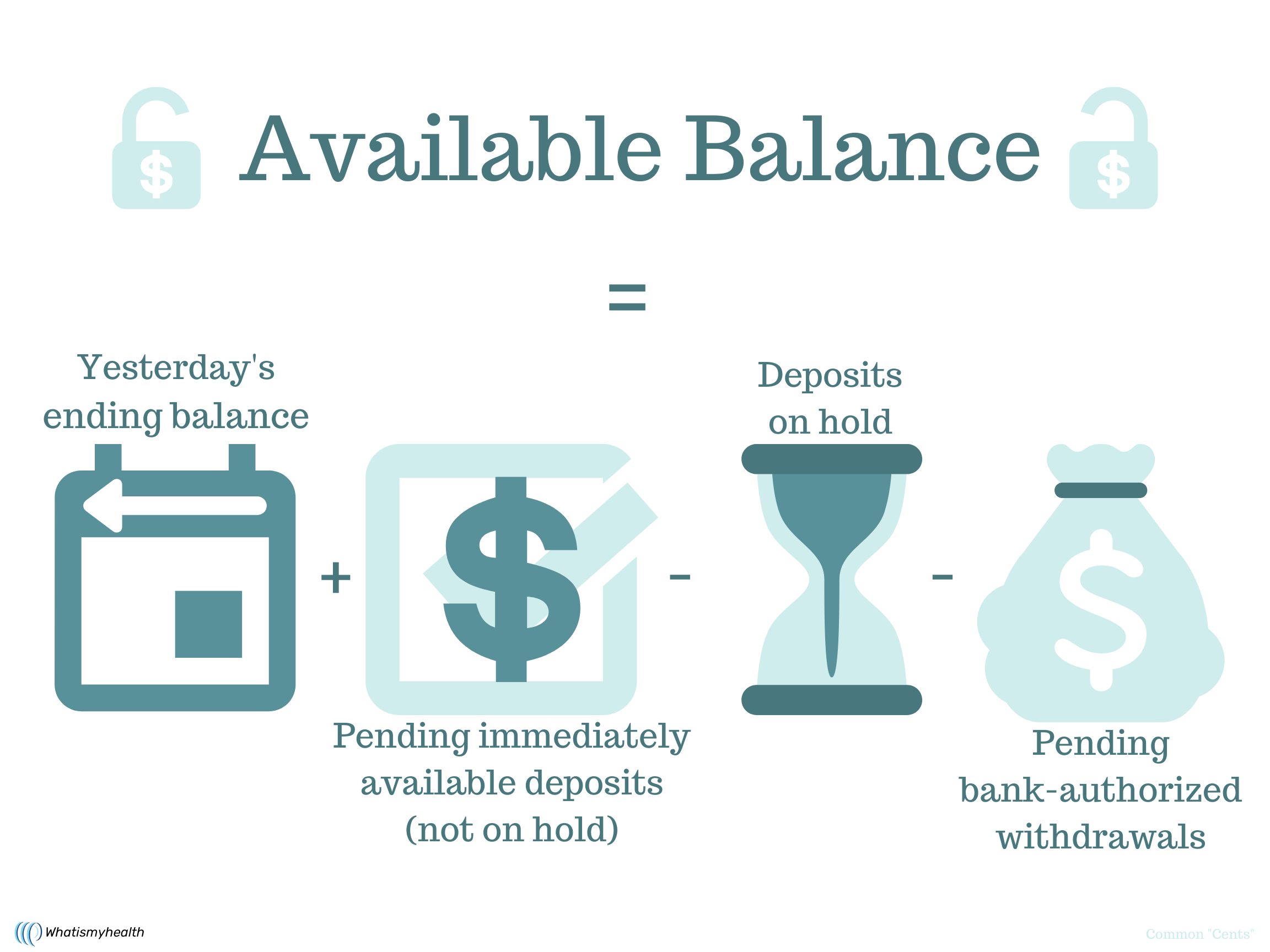
Available balance is the most current record of the amount of money available for your use or withdrawal. When you call the bank for your balance, they will give you the most current available balance. How the bank calculates the available balance:

Previous day ending balance

  • Less any holds placed on deposits

  • Less pending withdrawals the bank has authorized

  • Plus, pending deposits that are immediately available, such as cash and checks that were not put on hold.
 
Available Balance.png
 

Checking Account Rules

Here are some important checking account rules:

1. Non-customers presenting checks over the counter must have an acceptable ID. Acceptable ID is any government photo ID, such as a driver’s license, military ID, or passport. What all acceptable IDs have in common is a birth date, photo, and issue date.



2. If you want to withdraw large amounts of cash, you must notify the bank in advance so that they have the funds available. Large amounts are usually $20,000 or more. If you want certain denominations of cash, you must notify the bank in advance for the same reason you would if the amount was much smaller. You must provide your own security when leaving the bank with large amounts of cash. Simply put, if you walk around with cash, be careful.


3. If you require multiple signers on a check, the bank will not check to see if your checks have those signatures. This is due to the large amounts of checks—in the thousands or even more—that are processed each day by the banks. The software and machines that process these checks cannot be tailored for individual account requirements due to the very high cost of doing so.


4. If your check has special instructions such as “void after 30 days,” the bank will not verify that the check is within the instruction guidelines, regardless of the special instructions. The bank does not follow special instructions written on a check (this is for the same reason as noted in number 3).

5. If you use a check-signing stamp or machine, the bank will accept these types of signatures, however, you must use standard checking size, paper, dimensions for your checks. The bank will not accept any checks written on paper or material not following these dimensions.

There are generally two sizes of checks. "Business" checks are the same size as pre-1929 US currency. "Personal" checks are the same size as modern US currency. These are not coincidences; making checks the same size as money means that all of the cash register trays etc, built to hold money can also hold checks and the software and hardware that process checks are tailored for the same dimensions.
 
WHATISMYHEALTH+PRESENTS_+%281%29.jpg
 

6. The bank posts transactions to your account in a specific way. Transactions are posted each business day (M to F), except Federal Holidays. Posting can be done multiple times a day, and there are several key steps to the process.

First, the bank calculates the available balance. Then, all transactions are sorted into categories. Deposits made are added to the balance; withdrawals and payments are subtracted. Checks are processed based on the date and time they are received by the bank. Finally, any checks which you have authorized are paid.


7. Stop payments on a check are good for a period of 6 months only. They can be renewed for another 6 months if needed. If you do not renew a stop payment your check can be cashed.

The only way to ensure that a check is not cashed in the future is to constantly renew the stop payment. Other than this constant stop payment renewal, there is no way to permanently stop a check from being cashed, with the exception of a cashiers check. The bank can, and does, put on permanent hold on cashier’s checks because this type of check comes from the bank’s own checking account, and so it has control over the account and its contents.

Stay tuned to read about getting an account started as the first financial health mini-series from Common “Cents” concludes, next month.

Share your comments at the bottom of the page.

© Whatismyhealth
Common "Cents"
Be Prepared: Common Documents for Deductions and Credits
Mar 23, 2022
Be Prepared: Common Documents for Deductions and Credits
Mar 23, 2022

A checklist of common documents related to deductions and credits that you will need when preparing to file your taxes for last year.

Read More →
Mar 23, 2022
Be Prepared: Common Income-Related Tax Documents
Feb 23, 2022
Be Prepared: Common Income-Related Tax Documents
Feb 23, 2022

A checklist of common documents related to income that you will need when preparing to file your taxes for last year.

Read More →
Feb 23, 2022
Be Prepared: Pensions, Annuities, and Social Security
Dec 29, 2021
Be Prepared: Pensions, Annuities, and Social Security
Dec 29, 2021

Discussing regular payments made through pensions and annuities, as well as social security benefits, as they relate to tax preparation.

Read More →
Dec 29, 2021
Be Prepared: Interest, Dividends and Distributions
Nov 17, 2021
Be Prepared: Interest, Dividends and Distributions
Nov 17, 2021

Discussing investments and their yields, and how these returns factor into tax preparation.

Read More →
Nov 17, 2021
Be Prepared: Wages, the W-2, and 1098-E Forms
Oct 20, 2021
Be Prepared: Wages, the W-2, and 1098-E Forms
Oct 20, 2021

Reviewing employee wages, salaries, taxes, and other forms of compensation, and how they are reported.

Read More →
Oct 20, 2021
Be Prepared: Dependents
Sep 22, 2021
Be Prepared: Dependents
Sep 22, 2021

Claiming dependents on your tax return can earn you exemptions and save you money.

Read More →
Sep 22, 2021
Be Prepared: Standard Deductions
Jul 28, 2021
Be Prepared: Standard Deductions
Jul 28, 2021

The Standard Deduction is subtracted from your income, which may lower the amount of taxes you owe.

Read More →
Jul 28, 2021
Be Prepared: The 1040 Form & Filing Status
Jun 30, 2021
Be Prepared: The 1040 Form & Filing Status
Jun 30, 2021

Being prepared to do your taxes can save you time and money. An introduction to the 1040 tax form.

Read More →
Jun 30, 2021
Being a Smart Banking Consumer: Opening a Checking Account (continued)
Nov 18, 2020
Being a Smart Banking Consumer: Opening a Checking Account (continued)
Nov 18, 2020

A final look at what is needed to open a checking account and the documents you’ll receive.

Read More →
Nov 18, 2020
Being a Smart Banking Consumer: Opening a Checking Account
May 20, 2020
Being a Smart Banking Consumer: Opening a Checking Account
May 20, 2020

Reviewing what is needed to open a checking account, and some of the documents you’ll receive when you do.

Read More →
May 20, 2020
Being a Smart Banking Consumer: Checking Terminology and 7 Important Rules
Mar 25, 2020
Being a Smart Banking Consumer: Checking Terminology and 7 Important Rules
Mar 25, 2020

Discussing important terminology and checking account rules the bank follows.

Read More →
Mar 25, 2020
WHATISMYHEALTH+PRESENTS_+%281%29.jpg
Jan 29, 2020
Being a Smart Banking Consumer: Privacy and Regulations
Jan 29, 2020
Read More →
Jan 29, 2020
Being a Smart Banking Consumer: Electronic Money Movement
Dec 18, 2019
Being a Smart Banking Consumer: Electronic Money Movement
Dec 18, 2019

Addressing digital banking basics— online banking, the Automated Clearing House System, and debit cards. 

Read More →
Dec 18, 2019
Being a Smart Banking Consumer: More Common Account Activities
Nov 27, 2019
Being a Smart Banking Consumer: More Common Account Activities
Nov 27, 2019

Covering additional account activities including normal and unusual funds availability, as well as non-U.S. items.

Read More →
Nov 27, 2019
Being a Smart Banking Consumer: Common Checking Account Activities
Oct 30, 2019
Being a Smart Banking Consumer: Common Checking Account Activities
Oct 30, 2019

Outlining the most significant types of transactions completed using checking accounts.

Read More →
Oct 30, 2019
Being a Smart Banking Consumer: Savings Accounts
Sep 18, 2019
Being a Smart Banking Consumer: Savings Accounts
Sep 18, 2019

For many people, putting money in a savings account has a certain feeling and purpose— to save money.

Read More →
Sep 18, 2019
Being a Smart Banking Consumer: Checking Accounts
Aug 21, 2019
Being a Smart Banking Consumer: Checking Accounts
Aug 21, 2019

Every bank has different names for checking accounts, but generally, they are all basically limited to a few specific types.

Read More →
Aug 21, 2019
Being a Smart Banking Consumer: Consumer Rights and Responsibilities
Jul 24, 2019
Being a Smart Banking Consumer: Consumer Rights and Responsibilities
Jul 24, 2019

Your rights and responsibilities as an account holder are set out in the agreements you sign when you open an account.

Read More →
Jul 24, 2019
Being a Smart Banking Consumer: Bank Rights and Responsibilities
Jun 26, 2019
Being a Smart Banking Consumer: Bank Rights and Responsibilities
Jun 26, 2019

Some of the most important responsibilities a bank has to you, the customer, are set out in the agreements you sign and/or agree to when you open an account.

Read More →
Jun 26, 2019
Common Cents- Infographic 1- An Introduction to Banking.png
May 29, 2019
Being a Smart Banking Consumer: An Introduction to Banking
May 29, 2019

The more information you have about why and how banks do what they do, the better consumer you can be.

Read More →
May 29, 2019
March 25, 2020/ Gene Bucciarelli/
Financial Health
health, financial health, bank, checking, checking account, savings, savings account, loan, banking, understand, terminology, rules, available balance, available, balance, money, withdrawal, current balance, calculate, ending balance, hold, deposit, withdraw, authorize, cash, check, customer, ID, identification, government, photo ID, driver's license, military ID, passport, birth date, photo, issue date, notify, funds, denomination, security, careful, signature, process, software, cost, account, two-signature requirement, requirement, stamp, checking size, checking paper, business check, U.S. currency, United States, pre-1929 currency, currency, personal check, modern U.S. currency, cash register, hardware, transactions, business day, Federal holiday, federal, subtract, date, time, authorized, paid, stop payment, cashier's check

Gene Bucciarelli

  • Being a Smart Banking Consumer: ...
  • Being a Smart Banking Consumer: ...

Powered by Squarespace.  View Disclaimer