What Is My Health
  • Home
  • The 8 Dimensions of Health Physical Health Mental Health Intellectual Health Social Health Environmental Health Financial Health Spiritual Health Occupational Health
  • Blogs Podcast Videos Newsfeeds Resources
  • About WIMH Our Team Partners & Collaborators Contact
What Is My Health
  • Home/
  • Topics/
    • The 8 Dimensions of Health
    • Physical Health
    • Mental Health
    • Intellectual Health
    • Social Health
    • Environmental Health
    • Financial Health
    • Spiritual Health
    • Occupational Health
  • Media/
    • Blogs
    • Podcast
    • Videos
    • Newsfeeds
    • Resources
  • Info/
    • About WIMH
    • Our Team
    • Partners & Collaborators
    • Contact
Screen+Shot+2019-04-12+at+2.22.35+PM.jpg
What Is My Health

Let's change the way we see health

Common "Cents"

by Capt. Eugene Bucciarelli, CPA

What Is My Health
  • Home/
  • Topics/
    • The 8 Dimensions of Health
    • Physical Health
    • Mental Health
    • Intellectual Health
    • Social Health
    • Environmental Health
    • Financial Health
    • Spiritual Health
    • Occupational Health
  • Media/
    • Blogs
    • Podcast
    • Videos
    • Newsfeeds
    • Resources
  • Info/
    • About WIMH
    • Our Team
    • Partners & Collaborators
    • Contact
June 26, 2019

Being a Smart Banking Consumer: Bank Rights and Responsibilities

June 26, 2019/ Gene Bucciarelli

Banks are a place for us to handle our checking, savings, and possibly a loan. Beyond that, for many of us banking is a black hole. Why banks do what they do and how they do it is little understood outside of the banking community.

The more information you have, the better consumer you can be.

Being a Smart Banking Consumer

(Part 2): Bank Rights & Responsibilities

 
Common Cents- Bank Responsibilities infographic.png
 

In this post, we’ll deal with the bank’s rights and responsibilities to you as the account holder.  These are set out in the agreements you sign and/or agree to when you open an account. The most significant agreement is called the Deposit Agreement. This document can be up to 40 or 50 pages of what the bank must do, by law, when certain situations occur relating to your account.

Here are some of the most important responsibilities a bank has to you, the customer:


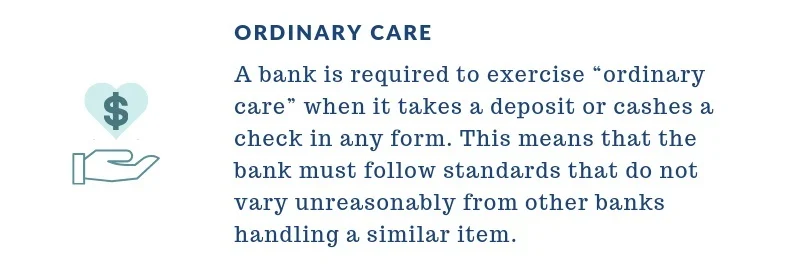
Ordinary Care

A bank is required to exercise “ordinary care” when it takes a deposit or cashes a check in any form. Ordinary care means that the bank must follow standards that do not vary unreasonably from other banks handling a similar item. The one exception is if it’s an automated item; in this case, the bank is not required to examine these.

If the bank follows ordinary care in the handling of any item, you release the bank from any claims or losses you incur.  However, if you can show that the bank did not exercise ordinary care and you suffered a loss as a result, the bank may reverse a decision it made against your account. You may also be able to claim monetary damages in a court.
 
Common+Cents-+Bank+Responsibilities+infographic.jpg
 

An example of this could be that you asked the bank to pay your rent payment at a certain date each month out of your account. The bank is responsible to make that payment. If the bank does not pay that rent payment and you get an additional charge, or possibly even an eviction notice at the extreme, the bank did not exercise ordinary care. In this scenario, you may have a case for monetary damages against the bank.


Adverse Claims

An adverse claim is defined as any of the following:

  • Any person or company makes a claim against your account. For example, you are sued, and the judgement allows the person or entity to access the funds in your account;

  • A conflict exists between or among your account holders. For example, a joint account with two partners who have a disagreement about the funds in the account;

  • A dispute exists as to who is the owner of the funds in the account.

There are several possible actions that the bank can take when there is an adverse claim against your account.

For example, say you indicated verbally to the bank that you did not authorize a check, but your signature is on the check. This dispute has to do with whether a check has been authorized by someone who is on the signature card. In this case, the bank can rely on the signatures on the signature card of the account.

Let’s say you have a lengthy dispute with a utility, like the gas and electric company, and the utility company claims that you do owe a certain amount of payment. The bank can honor these claims, if you agree. Of course, sometimes you won’t always agree.

In a case where such a dispute is unresolved, the bank can freeze the funds until they feel the dispute is resolved. This can be a benefit to you as the customer, as a government or person who made a claim on the account must resolve the dispute with you. For example, a state indicates you owe certain taxes. The state cannot take your funds until the two of you agree to the exact amount that you owe. In some cases, these disputes may need to be resolved in court. In other instances, a bank can close an account and send the funds to you and anyone who claimed the funds.


Legal Process

Legal process is any valid tax, garnishment, or withholding order, such as a warrant or subpoena against your account.  An example occurs when you have not paid your state or federal income tax. The taxing authorities can then garnish your account. That is, they can ask the bank to remit to the authority the amount of the tax. The bank is required to honor all valid legal processes and will withdraw funds or freeze the funds in the account.
 
Common%2BCents-%2BBank%2BResponsibilities%2Binfographic.jpg
 

Suspicious or Unusual Activity

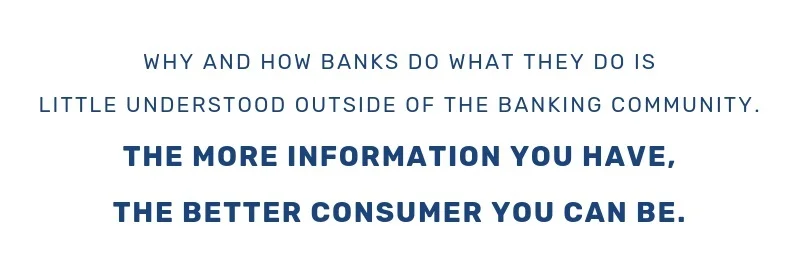
The bank may restrict access to your account if it suspects any suspicious, unauthorized, or unlawful activity. Money laundering, or using an account to deposit funds from illegal internet gambling or sales of drugs are examples of suspicious activity. Banks are required, by law, to monitor for money laundering. All banks have extensive software that monitors every account at the bank daily for out-of-pattern activity.

For example, let’s say you rarely deposit cash into your account. Then, one day, your account receives a deposit of $20,000 in cash. The bank would see this as out-of-pattern “unusual activity” and investigate for the possibility of you obtaining the money illegally. On the positive side, if someone has hacked into your account and is making withdrawals which you did not approve or have knowledge of, the bank may see this as suspicious activity, notify you, and freeze your account until they can confirm whether you are the one who made the withdrawals or payments.
 
Common+Cents-+Bank+Responsibilities+infographic.jpg
 

Stay tuned for part 3, where we will go into more detail on your rights and responsibilities as a customer.

Whatismyhealth © 2019
Common "Cents"
Be Prepared: Common Documents for Deductions and Credits
Mar 23, 2022
Be Prepared: Common Documents for Deductions and Credits
Mar 23, 2022

A checklist of common documents related to deductions and credits that you will need when preparing to file your taxes for last year.

Read More →
Mar 23, 2022
Be Prepared: Common Income-Related Tax Documents
Feb 23, 2022
Be Prepared: Common Income-Related Tax Documents
Feb 23, 2022

A checklist of common documents related to income that you will need when preparing to file your taxes for last year.

Read More →
Feb 23, 2022
Be Prepared: Pensions, Annuities, and Social Security
Dec 29, 2021
Be Prepared: Pensions, Annuities, and Social Security
Dec 29, 2021

Discussing regular payments made through pensions and annuities, as well as social security benefits, as they relate to tax preparation.

Read More →
Dec 29, 2021
Be Prepared: Interest, Dividends and Distributions
Nov 17, 2021
Be Prepared: Interest, Dividends and Distributions
Nov 17, 2021

Discussing investments and their yields, and how these returns factor into tax preparation.

Read More →
Nov 17, 2021
Be Prepared: Wages, the W-2, and 1098-E Forms
Oct 20, 2021
Be Prepared: Wages, the W-2, and 1098-E Forms
Oct 20, 2021

Reviewing employee wages, salaries, taxes, and other forms of compensation, and how they are reported.

Read More →
Oct 20, 2021
Be Prepared: Dependents
Sep 22, 2021
Be Prepared: Dependents
Sep 22, 2021

Claiming dependents on your tax return can earn you exemptions and save you money.

Read More →
Sep 22, 2021
Be Prepared: Standard Deductions
Jul 28, 2021
Be Prepared: Standard Deductions
Jul 28, 2021

The Standard Deduction is subtracted from your income, which may lower the amount of taxes you owe.

Read More →
Jul 28, 2021
Be Prepared: The 1040 Form & Filing Status
Jun 30, 2021
Be Prepared: The 1040 Form & Filing Status
Jun 30, 2021

Being prepared to do your taxes can save you time and money. An introduction to the 1040 tax form.

Read More →
Jun 30, 2021
Being a Smart Banking Consumer: Opening a Checking Account (continued)
Nov 18, 2020
Being a Smart Banking Consumer: Opening a Checking Account (continued)
Nov 18, 2020

A final look at what is needed to open a checking account and the documents you’ll receive.

Read More →
Nov 18, 2020
Being a Smart Banking Consumer: Opening a Checking Account
May 20, 2020
Being a Smart Banking Consumer: Opening a Checking Account
May 20, 2020

Reviewing what is needed to open a checking account, and some of the documents you’ll receive when you do.

Read More →
May 20, 2020
Being a Smart Banking Consumer: Checking Terminology and 7 Important Rules
Mar 25, 2020
Being a Smart Banking Consumer: Checking Terminology and 7 Important Rules
Mar 25, 2020

Discussing important terminology and checking account rules the bank follows.

Read More →
Mar 25, 2020
WHATISMYHEALTH+PRESENTS_+%281%29.jpg
Jan 29, 2020
Being a Smart Banking Consumer: Privacy and Regulations
Jan 29, 2020
Read More →
Jan 29, 2020
Being a Smart Banking Consumer: Electronic Money Movement
Dec 18, 2019
Being a Smart Banking Consumer: Electronic Money Movement
Dec 18, 2019

Addressing digital banking basics— online banking, the Automated Clearing House System, and debit cards. 

Read More →
Dec 18, 2019
Being a Smart Banking Consumer: More Common Account Activities
Nov 27, 2019
Being a Smart Banking Consumer: More Common Account Activities
Nov 27, 2019

Covering additional account activities including normal and unusual funds availability, as well as non-U.S. items.

Read More →
Nov 27, 2019
Being a Smart Banking Consumer: Common Checking Account Activities
Oct 30, 2019
Being a Smart Banking Consumer: Common Checking Account Activities
Oct 30, 2019

Outlining the most significant types of transactions completed using checking accounts.

Read More →
Oct 30, 2019
Being a Smart Banking Consumer: Savings Accounts
Sep 18, 2019
Being a Smart Banking Consumer: Savings Accounts
Sep 18, 2019

For many people, putting money in a savings account has a certain feeling and purpose— to save money.

Read More →
Sep 18, 2019
Being a Smart Banking Consumer: Checking Accounts
Aug 21, 2019
Being a Smart Banking Consumer: Checking Accounts
Aug 21, 2019

Every bank has different names for checking accounts, but generally, they are all basically limited to a few specific types.

Read More →
Aug 21, 2019
Being a Smart Banking Consumer: Consumer Rights and Responsibilities
Jul 24, 2019
Being a Smart Banking Consumer: Consumer Rights and Responsibilities
Jul 24, 2019

Your rights and responsibilities as an account holder are set out in the agreements you sign when you open an account.

Read More →
Jul 24, 2019
Being a Smart Banking Consumer: Bank Rights and Responsibilities
Jun 26, 2019
Being a Smart Banking Consumer: Bank Rights and Responsibilities
Jun 26, 2019

Some of the most important responsibilities a bank has to you, the customer, are set out in the agreements you sign and/or agree to when you open an account.

Read More →
Jun 26, 2019
Common Cents- Infographic 1- An Introduction to Banking.png
May 29, 2019
Being a Smart Banking Consumer: An Introduction to Banking
May 29, 2019

The more information you have about why and how banks do what they do, the better consumer you can be.

Read More →
May 29, 2019
June 26, 2019/ Gene Bucciarelli/
Financial Health
health, financial health, banking, bank, checking, checking account, savings, savings account, loan, understand, consumer, smart, rights, responsibility, account holder, deposit agreement, deposit, document, law, ordinary care, cash, check, automated, claim, loss, monetary, damages, pay, rent, payment, responsible, charge, adverse claims, person, company, sue, judgement, funds, conflict, joint account, partner, dispute, disagreement, owner, authorize, signature, signature card, utility, gas, electric, owe, honor, unresolved, freeze, benefit, customer, government, state, taxes, court, legal process, close, resolved, tax, garnishment, withholding, order, warrant, subpoena, federal, income, federal income tax, income tax, authority, withdraw, suspicious activity, unusual activity, restrict, access, suspicious, unlawful, money, money laundering, illegal, gambling, sales, software, activity, investigate, hack, withdrawal, approve, notify

Gene Bucciarelli

  • Being a Smart Banking Consumer: ...
  • Being a Smart Banking Consumer: An ...

Powered by Squarespace.  View Disclaimer