What Is My Health
  • Home
  • The 8 Dimensions of Health Physical Health Mental Health Intellectual Health Social Health Environmental Health Financial Health Spiritual Health Occupational Health
  • Blogs Podcast Videos Newsfeeds Resources
  • About WIMH Our Team Partners & Collaborators Contact
What Is My Health
  • Home/
  • Topics/
    • The 8 Dimensions of Health
    • Physical Health
    • Mental Health
    • Intellectual Health
    • Social Health
    • Environmental Health
    • Financial Health
    • Spiritual Health
    • Occupational Health
  • Media/
    • Blogs
    • Podcast
    • Videos
    • Newsfeeds
    • Resources
  • Info/
    • About WIMH
    • Our Team
    • Partners & Collaborators
    • Contact
Screen+Shot+2019-04-12+at+2.22.35+PM.jpg
What Is My Health

Let's change the way we see health

Common "Cents"

by Capt. Eugene Bucciarelli, CPA

What Is My Health
  • Home/
  • Topics/
    • The 8 Dimensions of Health
    • Physical Health
    • Mental Health
    • Intellectual Health
    • Social Health
    • Environmental Health
    • Financial Health
    • Spiritual Health
    • Occupational Health
  • Media/
    • Blogs
    • Podcast
    • Videos
    • Newsfeeds
    • Resources
  • Info/
    • About WIMH
    • Our Team
    • Partners & Collaborators
    • Contact
February 23, 2022

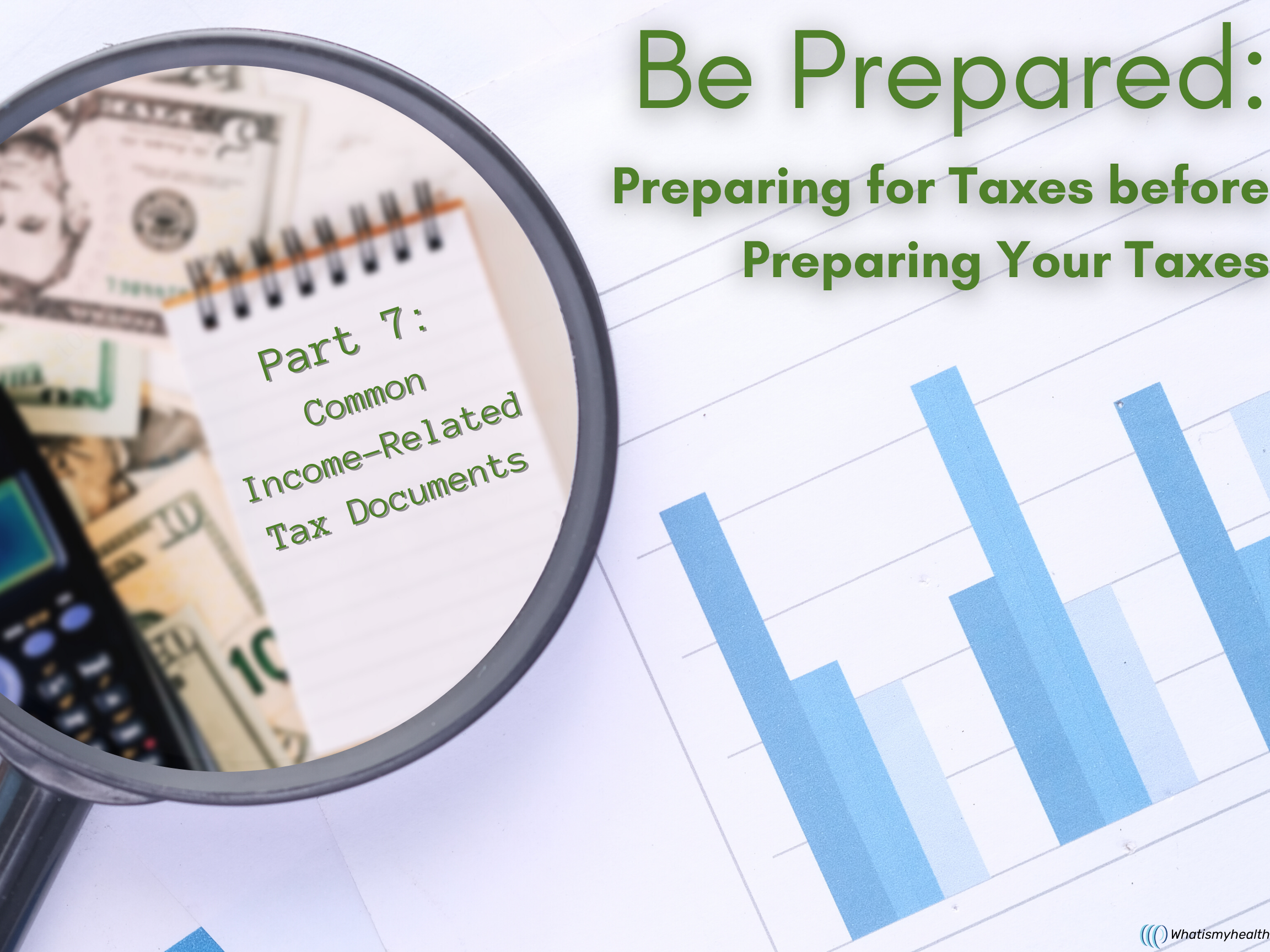
Be Prepared: Common Income-Related Tax Documents

February 23, 2022/ Gene Bucciarelli
Be Prepared: Common Income-Related Tax Documents

A checklist of common documents related to income that you will need when preparing to file your taxes for last year.

Read More
February 23, 2022/ Gene Bucciarelli/
Financial Health
health, financial health, tax, taxes, documentation, tax preparer, time, money, save, organization, calculate, pay, refund, document, forms, income, fiscal eyar, deductions, spend, checklist, wages, salary, company, employed, W-2 Form, Form W-2, social security, Medicare, Medicare tax, Social Security tax, withholding, unemployment, benefits, state, 1099-G, state tax, tax refund, interest, dividends, savings, savings account, checking, checking account, bonds, stocks, bank, stockbroker, broker, 1099-Dividends Fform, 1099-Interest form, trading, trade, statement, 1099-B Form, sale, sales, realized gain, gains, realized losses, loss, asset, price, retirement, retired, retire, pension, 1099-R Form, retirement income, Social Security, Social Security Administration, SSA, SSA-1099 Form, rent, rental, property, own, expense, expenses, rental property, rent check, check, utility, utility bill, water, garbage, repair, repair bills, business, business income, business expense, owner, Schedule C, Schedule C form, inventory, cost, sold, gambling, winnings, recreational, recreational gambling, real estate, 1099-S Form, title company, proceeds, improvements, taxable, taxable gain, appreciation, value, increase, 1099 Miscellaneous Form, self-employed, prize, prize winnings
November 18, 2020

Being a Smart Banking Consumer: Opening a Checking Account (continued)

November 18, 2020/ Gene Bucciarelli
Being a Smart Banking Consumer: Opening a Checking Account (continued)

A final look at what is needed to open a checking account and the documents you’ll receive.

Read More
November 18, 2020/ Gene Bucciarelli/
Financial Health
health, financial health, bank, checking account, checking, savings, savings account, loan, banking, understand, information, consumer, closed, bounced check, customer, account history, driver's license, idendification, ID, picture ID, photo ID, identification, money, minimum, deposit, risk, document, electronic, funds, transfer, Electronic Funds Transfer Act Form, Electronic Funds Transfer Act, EFTA, EFTA Form, disclose, disclosure, protect, service, ATM, credit card, retail, ACH, Automated Clearing House, company, payment, payroll, employer, telephone bill payment, bill, bill payment, recurring, recurring transfer, remote banking, online banking, remittance transfer, remittance, family, foreign country, United States, Mexico, electronic funds transfer, accepted device, device, authorize, authorized, property, smartphone, computer, home telephone, ATM machine, electronic check, check, ECK, transaction, transactions, ECK transaction, account, authorization, liability, consumer liability, financial institution, financial, unauthorized, unauthorized transfer, report, lost, stolen, disclosure statement, error resolution, ten-day period, 10-day period, investigate, error, business day, forty-five-day period, 45-day period, provisional credit, credit, provisional, resolution, permanent credit, overdraft protection, overdraft, protection, insufficient funds, owe, opt in, opt out, opt-in, opt-out, overdraft fee, overdraw, dollars
May 20, 2020

Being a Smart Banking Consumer: Opening a Checking Account

May 20, 2020/ Gene Bucciarelli
Being a Smart Banking Consumer: Opening a Checking Account

Reviewing what is needed to open a checking account, and some of the documents you’ll receive when you do.

Read More
May 20, 2020/ Gene Bucciarelli/
Financial Health
health, financial health, bank, checking, checking account, savings, savings account, loan, banking, understand, information, consumer, bounced check, check, account, customer, account history, driver's license, photo ID, ID, identification, picture ID, money, minimum, deposit, risk, money laundering, document, background information, deposit agreement, deposit account agreement, rights, legal, transaction, transactions, process, close, Schedule of Fees, fees, wire transfer, charge, stop payment, privacy notice, privacy, government, state, nonpublic information, social security number, SSN, service, software, processing, opt out, FDIC, FDIC Insurance Booklet, insurance, Federal Deposit Insurance Agency, pay, insured, joint account, limit, accrual, interest, stocks, annuities
March 25, 2020

Being a Smart Banking Consumer: Checking Terminology and 7 Important Rules

March 25, 2020/ Gene Bucciarelli
Being a Smart Banking Consumer: Checking Terminology and 7 Important Rules

Discussing important terminology and checking account rules the bank follows.

Read More
March 25, 2020/ Gene Bucciarelli/
Financial Health
health, financial health, bank, checking, checking account, savings, savings account, loan, banking, understand, terminology, rules, available balance, available, balance, money, withdrawal, current balance, calculate, ending balance, hold, deposit, withdraw, authorize, cash, check, customer, ID, identification, government, photo ID, driver's license, military ID, passport, birth date, photo, issue date, notify, funds, denomination, security, careful, signature, process, software, cost, account, two-signature requirement, requirement, stamp, checking size, checking paper, business check, U.S. currency, United States, pre-1929 currency, currency, personal check, modern U.S. currency, cash register, hardware, transactions, business day, Federal holiday, federal, subtract, date, time, authorized, paid, stop payment, cashier's check
January 29, 2020

Being a Smart Banking Consumer: Privacy and Regulations

January 29, 2020/ Gene Bucciarelli

Banks are a place for us to handle our checking, savings, and possibly a loan. Beyond that, for many of us banking is a black hole. Why banks do what they do and how they do it is little understood outside of the banking community.

The more information you have, the better consumer you can be.
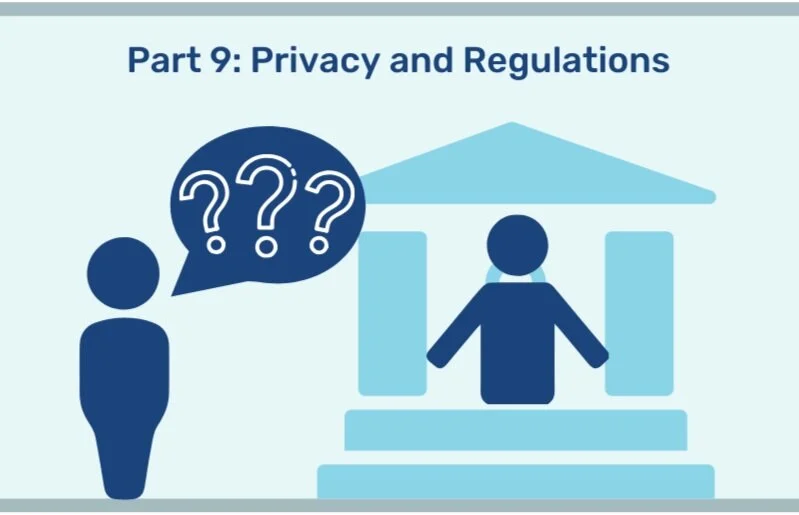
Being a Smart Banking Consumer

(Part 9): Privacy and Regulations

 
WHATISMYHEALTH+PRESENTS_+%281%29.jpg
 

This article will discuss the most important banking laws and the implications for you as the banking client.

Privacy

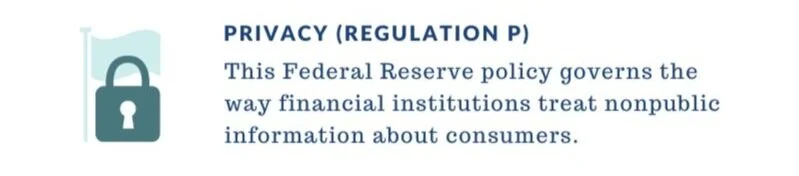
Regulation P governs the way financial institutions treat nonpublic information about consumers. The regulation summarizes the obligations of a financial institution to provide notice to its customers about several things:

  • A financial institution must notify its customers of its privacy policies and practices

  • An institution must also notify the customer of the customer’s right to prevent a financial institution from disclosing nonpublic personal information to non-affiliated third parties by "opting out" of that disclosure
 
WHATISMYHEALTH+PRESENTS_+%281%29.jpg
 

These notices are required annually, and upon opening an account at the bank.

While Regulation P is primarily a Federal Reserve policy, all bank regulatory agencies have adopted it. These bank regulatory agencies include the following:

  • Federal Reserve (FED)– The FED oversees Bank Holding Companies. Bank holding companies are banks that own other banks. Each bank keeps a separate name. 

  • Federal Deposit Insurance Agency (FDIC) – The FDIC is responsible for deposit insurance. Basically, the FDIC has oversight over all banks that have deposits. 

  • Comptroller of the Currency- Banks that apply to be a national bank have branches in many states. The Office of the Comptroller of the Currency is responsible for these national banks.

  • State Banking agencies – These agencies oversee banks that are in their respective state.

As is apparent, there is much overlap in the regulatory structure, and many banks have two or more regulatory agencies. For example, a bank could be a National Bank that is also overseen by the FDIC, as well as the state banking agency.

Regulation CC

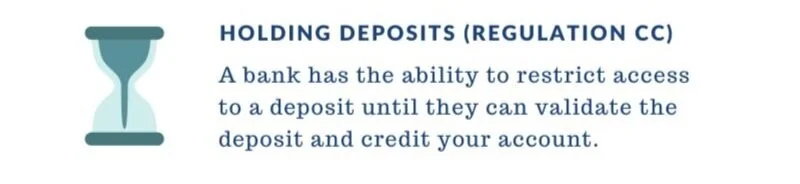
One of the aspects of Regulation CC is the ability for the bank to “hold” your checking deposits for a certain amount of days. To “hold” means you do not have access to your funds until the hold is released. Banks have broad discretion, in many instances, as to when and how long to hold your deposits. It could be from 2 to 9 days depending on the deposit amount and your account history with the bank.
 
WHATISMYHEALTH%2BPRESENTS_%2B%25281%2529.jpg
 

For example, if you normally deposit checks in the amount of $2,000, and one day you deposit checks for $30,000, the bank could hold your funds for as many as 7 days. The purposes of the hold are to: 1) ensure that all deposits are valid; 2) to avoid giving you access to your funds before the checks are verified as valid, and 3) ensure that the bank receives credit for those checks and gives credit to your account. The banks are required to provide notice that your funds are being held on the same day the bank decides to hold your funds.

Regulation DD

Regulation DD covers money market accounts and requires that all owners of money market accounts not make more than 6 withdrawals a month. Money market accounts are very volatile, that is, they are interest rate sensitive. As such, history has shown that funds move in and out of these accounts, largely depending on the interest rate offered. The bank will monitor your account each month for the number of transactions. If you violate the 6 withdrawal limit more than 3 times in 12 months, the bank will typically either close the account or move your funds to a different account.

Regulation E

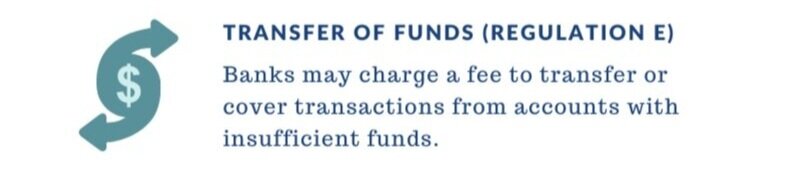
Regulation E relates to the transfer of funds. Banks charge overdraft fees when account holders spend more than they have. The bank may approve those charges despite a lack of funds (negative balance) in your account but will do so for a fee. If you make multiple purchases with a negative balance, the bank will charge an overdraft fee multiple times.

The median overdraft fee in the U.S. is $35, according to Pew Charitable Trusts. Just a few purchases beyond your balance, and you can pay more than $100 in fees alone. In 2017, consumers paid $34.3 billion in overdraft fees, which was the most since the Great Recession.
 
WHATISMYHEALTH+PRESENTS_+%281%29.jpg
 

One option the consumer has to avoid these fees is called overdraft protection, which is different from overdraft coverage:

  • Overdraft protection allows consumers to link a certain number of eligible accounts to their checking account. Then, if they overdraft their primary account, funds are automatically transferred from one of these other accounts.

  • Overdraft coverage means that the bank will give you up to a certain amount of coverage on charges for which there are insufficient funds. The coverage is basically a small loan. For example, you could have up to $300 of coverage, meaning that the bank will pay the overdraft amounts, up to $300 in checks. The bank will still charge a fee for this, but the checks will have been paid.

In both cases, you must sign up for either the coverage or the protection, or you can decline each. This is generally called “opting in" or “opting out.”

Being a Smart Banking Consumer continues in February.
Share your comments and questions at the bottom of the page.

© Whatismyhealth

Common "Cents"
Be Prepared: Common Documents for Deductions and Credits
Mar 23, 2022
Be Prepared: Common Documents for Deductions and Credits
Mar 23, 2022

A checklist of common documents related to deductions and credits that you will need when preparing to file your taxes for last year.

Read More →
Mar 23, 2022
Be Prepared: Common Income-Related Tax Documents
Feb 23, 2022
Be Prepared: Common Income-Related Tax Documents
Feb 23, 2022

A checklist of common documents related to income that you will need when preparing to file your taxes for last year.

Read More →
Feb 23, 2022
Be Prepared: Pensions, Annuities, and Social Security
Dec 29, 2021
Be Prepared: Pensions, Annuities, and Social Security
Dec 29, 2021

Discussing regular payments made through pensions and annuities, as well as social security benefits, as they relate to tax preparation.

Read More →
Dec 29, 2021
Be Prepared: Interest, Dividends and Distributions
Nov 17, 2021
Be Prepared: Interest, Dividends and Distributions
Nov 17, 2021

Discussing investments and their yields, and how these returns factor into tax preparation.

Read More →
Nov 17, 2021
Be Prepared: Wages, the W-2, and 1098-E Forms
Oct 20, 2021
Be Prepared: Wages, the W-2, and 1098-E Forms
Oct 20, 2021

Reviewing employee wages, salaries, taxes, and other forms of compensation, and how they are reported.

Read More →
Oct 20, 2021
Be Prepared: Dependents
Sep 22, 2021
Be Prepared: Dependents
Sep 22, 2021

Claiming dependents on your tax return can earn you exemptions and save you money.

Read More →
Sep 22, 2021
Be Prepared: Standard Deductions
Jul 28, 2021
Be Prepared: Standard Deductions
Jul 28, 2021

The Standard Deduction is subtracted from your income, which may lower the amount of taxes you owe.

Read More →
Jul 28, 2021
Be Prepared: The 1040 Form & Filing Status
Jun 30, 2021
Be Prepared: The 1040 Form & Filing Status
Jun 30, 2021

Being prepared to do your taxes can save you time and money. An introduction to the 1040 tax form.

Read More →
Jun 30, 2021
Being a Smart Banking Consumer: Opening a Checking Account (continued)
Nov 18, 2020
Being a Smart Banking Consumer: Opening a Checking Account (continued)
Nov 18, 2020

A final look at what is needed to open a checking account and the documents you’ll receive.

Read More →
Nov 18, 2020
Being a Smart Banking Consumer: Opening a Checking Account
May 20, 2020
Being a Smart Banking Consumer: Opening a Checking Account
May 20, 2020

Reviewing what is needed to open a checking account, and some of the documents you’ll receive when you do.

Read More →
May 20, 2020
Being a Smart Banking Consumer: Checking Terminology and 7 Important Rules
Mar 25, 2020
Being a Smart Banking Consumer: Checking Terminology and 7 Important Rules
Mar 25, 2020

Discussing important terminology and checking account rules the bank follows.

Read More →
Mar 25, 2020
WHATISMYHEALTH+PRESENTS_+%281%29.jpg
Jan 29, 2020
Being a Smart Banking Consumer: Privacy and Regulations
Jan 29, 2020
Read More →
Jan 29, 2020
Being a Smart Banking Consumer: Electronic Money Movement
Dec 18, 2019
Being a Smart Banking Consumer: Electronic Money Movement
Dec 18, 2019

Addressing digital banking basics— online banking, the Automated Clearing House System, and debit cards. 

Read More →
Dec 18, 2019
Being a Smart Banking Consumer: More Common Account Activities
Nov 27, 2019
Being a Smart Banking Consumer: More Common Account Activities
Nov 27, 2019

Covering additional account activities including normal and unusual funds availability, as well as non-U.S. items.

Read More →
Nov 27, 2019
Being a Smart Banking Consumer: Common Checking Account Activities
Oct 30, 2019
Being a Smart Banking Consumer: Common Checking Account Activities
Oct 30, 2019

Outlining the most significant types of transactions completed using checking accounts.

Read More →
Oct 30, 2019
Being a Smart Banking Consumer: Savings Accounts
Sep 18, 2019
Being a Smart Banking Consumer: Savings Accounts
Sep 18, 2019

For many people, putting money in a savings account has a certain feeling and purpose— to save money.

Read More →
Sep 18, 2019
Being a Smart Banking Consumer: Checking Accounts
Aug 21, 2019
Being a Smart Banking Consumer: Checking Accounts
Aug 21, 2019

Every bank has different names for checking accounts, but generally, they are all basically limited to a few specific types.

Read More →
Aug 21, 2019
Being a Smart Banking Consumer: Consumer Rights and Responsibilities
Jul 24, 2019
Being a Smart Banking Consumer: Consumer Rights and Responsibilities
Jul 24, 2019

Your rights and responsibilities as an account holder are set out in the agreements you sign when you open an account.

Read More →
Jul 24, 2019
Being a Smart Banking Consumer: Bank Rights and Responsibilities
Jun 26, 2019
Being a Smart Banking Consumer: Bank Rights and Responsibilities
Jun 26, 2019

Some of the most important responsibilities a bank has to you, the customer, are set out in the agreements you sign and/or agree to when you open an account.

Read More →
Jun 26, 2019
Common Cents- Infographic 1- An Introduction to Banking.png
May 29, 2019
Being a Smart Banking Consumer: An Introduction to Banking
May 29, 2019

The more information you have about why and how banks do what they do, the better consumer you can be.

Read More →
May 29, 2019
January 29, 2020/ Gene Bucciarelli/
Financial Health
health, financial health, bank, checking, savings, checking account, savings account, loan, banking, understand, information, consumer, privacy, regulations, law, client, Regulation P, financial institution, public, customer, notify, policy, privacy policy, privacy practices, rights, disclose, nonpublic information, third party, opt out, annual, account, Federal Reserve, regulatory agency, agency, the FED, bank holding companies, own, FDIC, Federal Deposit Insurance Agency, insurance, deposit, deposit insurance, Comptroller of the Currency, national, currency, Regulation CC, checking deposit, hold, access, funds, release, account history, check, valid, verify, credit, Regulation DD, money market account, withdraw, withdrawal, limit, interest rate, interest, rate, monitor, transactions, close, Regulation E, transfer, overdraft, overdraft fee, account holder, spend, approve, charge, negative balance, balance, fee, purchase, United States, Pew Charitable Trusts, Great Recession, overdraft protection, overdraft coverage, eligible, link, primary account, automatic, automatic transfer, coverage, paid, pay, decline, opt in

Gene Bucciarelli

December 18, 2019

Being a Smart Banking Consumer: Electronic Money Movement

December 18, 2019/ Gene Bucciarelli
Being a Smart Banking Consumer: Electronic Money Movement

Addressing digital banking basics— online banking, the Automated Clearing House System, and debit cards. 

Read More
December 18, 2019/ Gene Bucciarelli/
Financial Health
health, financial health, bank, checking, checking account, savings, savings account, loan, banking, understand, information, consumer, electronic, money, digital, online banking, Automated Clearing House, ACH, Automated Clearing House System, debit card, pay, bills, check, portal, verify, identification, access, ID, online access ID, password, company, one-time payment, ongoing payment, account, payment, ACH Network, data, United States, National Automated Clearing House Association, NACHA, administration, governance, direct deposit, paycheck, work, receive, government, financial, paper check, financial company, credit card, utility, ACH withdrawal, withdrawal, automatic, insurance, automatic withdrawal, permission, notify, unauthorized, unauthorized withdrawal, investigate, transaction, authorize, responsible, unauthorized transaction, credit union, ATM, purchase, retail, pin number, lost, stolen, business day
November 27, 2019

Being a Smart Banking Consumer: More Common Account Activities

November 27, 2019/ Gene Bucciarelli
Being a Smart Banking Consumer: More Common Account Activities

Covering additional account activities including normal and unusual funds availability, as well as non-U.S. items.

Read More
November 27, 2019/ Gene Bucciarelli/
Financial Health
health, financial health, bank, checking, savings, loan, checking account, savings account, banking, understand, information, consumer, transactions, client, CD, certificate of deposit, normal funds, availability, deposit, check, business, business day, payment, withdrawal, cash, holiday, federal, regulation, dollars, unusual funds, paid, overdraw, account, notify, hold, rights, responsibility, suspicious, suspicious activity, altered, forged, forgery, unauthorized, signature, resolved, credit, deduct, financial, Federal Reserve, clearinghouse, the FED, collection, process, payable, currency, U.S. dollars, USD, financial institution, United States, law, bank-to-bank, checks returned unpaid, unpaid, return, balance, fee, interest-bearing, interest, interest-bearing account, accrual
October 30, 2019

Being a Smart Banking Consumer: Common Checking Account Activities

October 30, 2019/ Gene Bucciarelli
Being a Smart Banking Consumer: Common Checking Account Activities

Outlining the most significant types of transactions completed using checking accounts.

Read More
October 30, 2019/ Gene Bucciarelli/
Financial Health
health, financial health, bank, checking, checking account, savings, savings account, loan, information, consumer, transaction, client, CD, certificate of deposit, deposit, withdrawal, Currency Transaction Report, CTR, lump sum, account, IRS, money laundering, Suspicious Activity Report, SAR, illegal, business, trace, co-ownership, signature card, funds, stop payment, authorize, reject, charge, fee, pay on death account, proceeds, death certificate, trust document, state, two-signature requirement, review, signature, special instructions, void, payable
September 18, 2019

Being a Smart Banking Consumer: Savings Accounts

September 18, 2019/ Gene Bucciarelli
Being a Smart Banking Consumer: Savings Accounts

For many people, putting money in a savings account has a certain feeling and purpose— to save money.

Read More
September 18, 2019/ Gene Bucciarelli/
Financial Health
health, financial health, bank, checking, savings, loan, checking account, savings account, banking, information, consumer, smart, account, certificate of deposit, CD, CD account, cashier's check, safe deposit box, free, Federal Reserve, the FED, responsible, money, unemployment, rate, inflation, interest rate, interest, financial, bank account, saving, borrowing, economy, stimulate, company, spend, jobs, price, earn, long-term, withdraw, withdrawal, money market, money market account, regulation, run on the bank, public, confidence, demand, cash, deposit, business, psychology, bills, pay, payment, feeling, purpose, save, access, ATM, indefinite, percent, increase, decrease, profit, annual percentage rate, APY, annual, monthly, annual rate, monthly rate, penalty, balance, value, maturity, fixed, maturity date, rollover
August 21, 2019

Being a Smart Banking Consumer: Checking Accounts

August 21, 2019/ Gene Bucciarelli
Being a Smart Banking Consumer: Checking Accounts

Every bank has different names for checking accounts, but generally, they are all basically limited to a few specific types.

Read More
August 21, 2019/ Gene Bucciarelli/
Financial Health
health, financial health, bank, checking, checking account, savings, savings account, loan, banking, understand, information, consumer, balance, minimum, No Minimum Balance Basic Checking Account, deposit, money, account, interest, earning, ATM, ATM card, debit, debit card, purchase, credit card, withdraw, withdrawal, foreign ATM, United States, overseas, caution, pin number, ATM number, secure, location, charge, fees, overdraft, overdraft protection, bill, pay, free, overdraft fee, limit, Minimum Balance Checking Account, dollar, dollars, average daily balance, minimum balance, safe deposit box, cashier's check, customer, Interest Checking Account, earn, interest rate, investment, earnings, Money Market Account, check, government, dormant account, dormant, security, theft, funds, state, owe, state agency, child welfare, welfare, payment, welfare payment, federal, levy, tax, taxes, back taxes
July 24, 2019

Being a Smart Banking Consumer: Consumer Rights and Responsibilities

July 24, 2019/ Gene Bucciarelli
Being a Smart Banking Consumer: Consumer Rights and Responsibilities

Your rights and responsibilities as an account holder are set out in the agreements you sign when you open an account.

Read More
July 24, 2019/ Gene Bucciarelli/
Financial Health
health, financial health, bank, checking, checking account, savings, savings account, loan, banking, understand, information, consumer, smart, rights, responsibility, account holder, account, deposit agreement, customer, deposit, ATM, interest, interest-bearing, interest-bearing account, money market, money market account, withdrawal, limit, federal, regulation, notify, non-interest-bearing, non-interest-bearing account, background information, legal, unlawful, activity, internet gambling, credit report, public records, motor vehicle records, privacy, privacy rights, privacy policy, state law, federal law, third party, banking system, wire transfer system, wire transfer, provider, market, investment, insurance
June 26, 2019

Being a Smart Banking Consumer: Bank Rights and Responsibilities

June 26, 2019/ Gene Bucciarelli
Being a Smart Banking Consumer: Bank Rights and Responsibilities

Some of the most important responsibilities a bank has to you, the customer, are set out in the agreements you sign and/or agree to when you open an account.

Read More
June 26, 2019/ Gene Bucciarelli/
Financial Health
health, financial health, banking, bank, checking, checking account, savings, savings account, loan, understand, consumer, smart, rights, responsibility, account holder, deposit agreement, deposit, document, law, ordinary care, cash, check, automated, claim, loss, monetary, damages, pay, rent, payment, responsible, charge, adverse claims, person, company, sue, judgement, funds, conflict, joint account, partner, dispute, disagreement, owner, authorize, signature, signature card, utility, gas, electric, owe, honor, unresolved, freeze, benefit, customer, government, state, taxes, court, legal process, close, resolved, tax, garnishment, withholding, order, warrant, subpoena, federal, income, federal income tax, income tax, authority, withdraw, suspicious activity, unusual activity, restrict, access, suspicious, unlawful, money, money laundering, illegal, gambling, sales, software, activity, investigate, hack, withdrawal, approve, notify
May 29, 2019

Being a Smart Banking Consumer: An Introduction to Banking

May 29, 2019/ Gene Bucciarelli

The more information you have about why and how banks do what they do, the better consumer you can be.

Read More
May 29, 2019/ Gene Bucciarelli/
Financial Health
health, financial health, banking, consumer, smart, bank, checking, savings, loan, understand, information, earn, money, dollar, cash, transaction, customer, Federal Reserve, account, checking account, savings account, vault, lend, interest, borrow, rate, profit, pay, bills, investor, borrower, government, bonds, federal, state, city, sell, closed, bounced check, driver's license, ID, identification, picture ID, minimum, deposit, money laundering, illegal, legal, trace, rights, account holder, document

Powered by Squarespace.  View Disclaimer